
Shakespeare Meets the 1950s South in Folger's Bold Measure for Measure
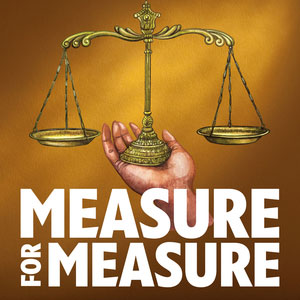
Shakespeare's Measure for Measure has long been called one of his "problem plays," a work that refuses to settle into comedy or tragedy and leaves audiences to argue over what justice and mercy really mean. At Folger Theatre, director Psalmayene 24 gives this rarely staged work a bold new setting, moving the action from Vienna to the segregated American South of the 1950s. The result is a production that is gripping, funny, unsettling, and deeply relevant, and it plays at the Folger Shakespeare Library on Capitol Hill through November 1, 2026.
The story follows Isabella, a young novice preparing to enter a convent, whose brother Claudio has been condemned to death under a newly enforced morality law. The Duke, realizing his city's laws have gone unenforced for years and unwilling to be seen as a tyrant for reviving them, hands power to his deputy Angelo and then slips back into town disguised as a friar to watch what happens. When Isabella pleads for her brother's life, Angelo offers her a monstrous bargain: her virginity in exchange for Claudio's freedom. In this adaptation by Mekala Sridhar, Claudio is a Black man sentenced for fathering a child with Juliet, a white woman, and that single change raises the stakes dramatically. Questions about who makes the rules, who gets punished for breaking them, and who has the power to grant mercy take on the full weight of American history.
That history is present from the moment audiences take their seats. Gospel songs fill the theatre before the show begins, while the set confronts viewers with a "Colored Waiting Room" sign and segregated drinking fountains. Debra Booth's scenic design surrounds the actors with towering white walls that make every character seem small against the institutions that govern them. Mika Eubanks' costumes, in dark tones and muted pastels, distinguish the brothel dwellers, government officials, and clergy with elegant clarity, and include a particularly lovely gown for Mariana. Jesse Belsky's moody lighting, Matthew M. Nielsen's sound design, an original score by KOKAYI, and Tony Thomas' fluid choreography give the production a contemporary pulse that helps the 400-year-old language feel immediate and accessible. Even audience members who find this play confusing on the page are likely to leave with a clearer sense of what Shakespeare was after.
At the center of it all is Renea S. Brown, already a three-time Helen Hayes Award winner, whose Isabella is earning raves as one of the finest performances on any DC stage this season. Brown captures both the character's steely moral conviction and her terror, playing Isabella as a quick-witted fighter and a young woman crushed by circumstances beyond her control. Her youthful openness makes everything that happens to her that much more devastating. Lee Osorio's Angelo is chilling, a smooth and calculating man who knows exactly what he is doing and does it anyway, and whose righteousness crumbles the moment it is tested. Nathan Darrow brings authority, ambiguity, and a surprising playfulness to the Duke, and his asides as the disguised friar are a highlight of the second act. JaBen Early gives a moving performance as Claudio, a man resigned to his fate.
The play's comic scenes are in expert hands as well. Jonathan Feuer, making his Folger debut, steals scene after scene as the flamboyant, gossiping Lucio. Ahmad Kamal is a slick and silly Pompey, John Sygar is delightfully dopey as Froth and also turns up as a guitar-playing boy, and Sean Fri's Provost provides big laughs in the final scene as he waits eagerly to reveal the Duke's true identity. Holly Twyford is excellent as a stern but quietly compassionate Escalus, and Renee Elizabeth Wilson brings warmth and a free spirit to Mariana, the woman Angelo once promised to marry. The ensemble works together with real generosity, and the production swings from laughter to horror in a way that keeps audiences thoroughly engaged.
The Folger last staged Measure for Measure in 2006, and this production makes the long wait worthwhile. It asks difficult questions about power, hypocrisy, and justice, yet ultimately offers a hopeful path forward. Theatregoers should consider arriving early to explore the Folger's ground floor Shakespeare exhibit, which includes interactive displays and a First Folio visitors can actually touch, and to return after October 16, when the new exhibition To Hear Her Speak: Black Women and Shakespeare opens.
Measure for Measure runs approximately two and a half hours with one 15-minute intermission. The production contains sexual references and a depiction of sexual assault. Performances continue through November 1, 2026,