
Happenstance Theater Sets Sail with Adrift: A Medieval Wayward Folly at Round House Theatre
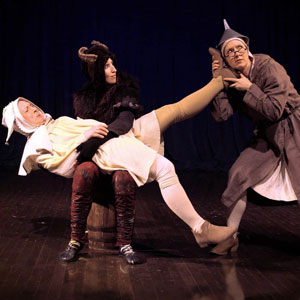
A ship of fools drifts on a windless sea. The world, it seems, has ended. "What do we do now?" the passengers ask, and the answer that unfolds over the next 85 minutes is one of the most inventive and joyful theatrical experiences on a DC-area stage this summer. "Adrift: A Medieval Wayward Folly," created and performed by Happenstance Theater, plays at Round House Theatre in Bethesda through August 2, 2026.
Happenstance, marking its 20th anniversary this year, draws its inspiration from the apocalyptic paintings of Hieronymus Bosch, the landscapes of Pieter Bruegel, medieval occultism, and the allegorical figures of the tarot. Out of these sources the company has devised a series of vignettes populated by archetypes brought vividly to life: the Fool, the Virgin, the Magus, the Crone, the Quack Physician, the Demon, and the Grim Reaper. Characters with giant strawberries and eggs for heads seem to have stepped directly out of Bosch's "Garden of Earthly Delights," and a puppet hellmouth and flying demon goat nod to some of medieval art's favorite obsessions.
The five-person ensemble of Mark Jaster, Sabrina Mandell, Gwen Grastorf, Sarah Olmsted Thomas, and Alex Vernon clowns, mimes, dances, sings, and plays period instruments throughout, blending physical comedy, chant, puppetry, and dance into a single flowing piece of theatrical alchemy. The humor ranges from medieval to modern, with winks at Monty Python and vaudeville-style comedy along the way. One highlight finds an improvising Oracle fielding questions from the audience about the future, while another invites theatergoers to hand their troubles over to a Wise Woman who tucks them away in a barrel. A childlike demon who attaches itself to the Fool, prompting a quack doctor's diagnosis of attachment issues, provides some of the evening's biggest laughs.
Beneath the comedy runs something deeper. The Middle Ages were an anxious time of war, famine, plague, and disaster, and the show suggests our medieval ancestors have more in common with us than we might like to admit. Their response, and the one "Adrift" offers its audience, was to laugh at the demons, imagine other worlds, and keep playing even when the future looks dark. Refrains about time taking us all away and reassurances to be not afraid thread through the evening, giving the folly an unexpected emotional weight.
The production's design work matches its ambition. Otherworldly chant, some of it rooted in the music of 12th-century composer Hildegard of Bingen, mixes with natural sound effects, while string puppets, shadow puppets, and creature puppets delight the eye. A simple set of wooden barrels and period instruments keeps the focus on the performers, and the stunning period costumes, which merge human and natural forms in true Bosch fashion, may be what audiences remember longest.